
Brain Health & Dementia Prevention
Hearing Loss Dementia Risk: 7 Proven Ways It Steals Your Loved One's Memory
Hearing loss dementia risk is one of the most urgent and underaddressed conversations in brain health today. If you have ever sat across the dinner table from someone you love, watching them nod at the wrong moment or asking the same question twice, you already know something is shifting. What most families do not know is that the science has a clear and actionable explanation for what is happening and what can be done about it.
Untreated hearing loss can raise the risk of developing dementia by up to 71% over 15 years, according to the Lancet Commission on Dementia Prevention. And yet it remains one of the most overlooked risk factors in brain health conversations. The encouraging news is that this is modifiable. Recent 2025 research from Johns Hopkins shows that hearing aid use is linked to a 32 to 61% lower dementia prevalence in people with moderate to severe hearing loss, and up to a 48% slower rate of cognitive decline in higher-risk individuals.
This article will walk you through exactly what is happening in the brain, why hearing loss dementia risk is so significant, and what practical steps you can take today. These are not small numbers. These are life-changing numbers.
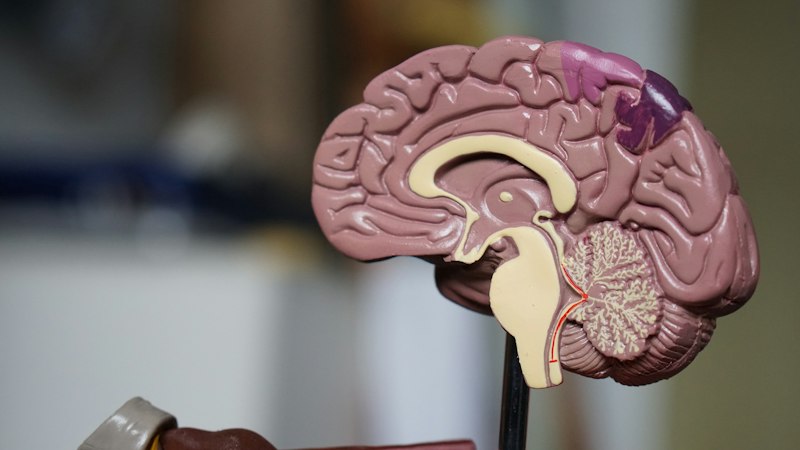
Understanding hearing loss dementia risk is one of the most protective things a family can do for a loved one's brain health.
1. What Is Effortful Listening and Why It Exhausts the Brain
When auditory input is degraded, the brain does not passively receive less sound. The auditory cortex and prefrontal areas immediately recruit extra resources to fill in the gaps. Researchers call this effortful listening, and it is the first major mechanism behind hearing loss dementia risk.
Effortful listening burns through cognitive reserve, essentially the brain's mental bandwidth, at an accelerated rate. Every conversation where your loved one has to work hard to decode speech is a withdrawal from that reserve. Over days and weeks this adds up to something measurable.
It also activates the autonomic nervous system, creating a sustained low-grade stress response. This is why these conversations can leave both of you feeling drained in ways that seem out of proportion to what was actually said. That exhaustion is real and it has a biological cause.
Increased dementia risk associated with untreated hearing loss over 15 years, per the Lancet Commission on Dementia Prevention, 2020.
2. How Hearing Loss Drains Cognitive Reserve Faster Than Normal Aging
Cognitive reserve is the brain's ability to cope with change and damage by drawing on existing neural networks. Think of it as a savings account. Effortful listening makes a withdrawal from that account every single day. Activities that should replenish reserve, such as rich social conversation, laughter, and meaningful connection, become harder when so much energy is already spent just decoding sound.
The Lancet Commission has consistently identified hearing loss as one of the most significant modifiable risk factors in midlife, ranking it alongside untreated depression and social isolation. This is not a minor footnote. It is a primary prevention opportunity that most families are never told about.
If you want to go deeper on the evidence, the full Lancet Commission report is publicly available and worth reading alongside any guidance from your loved one's care team.
3. Why Chronic Hearing Loss Physically Reorganizes the Brain
This is where the hearing loss dementia risk becomes genuinely urgent. Chronic untreated hearing loss does not stay in the ears. Over time, the temporal lobe regions responsible for language processing and memory receive less and less consistent auditory input. Social and predictive brain networks begin operating on incomplete data.
The result is increased allostatic load, the cumulative wear and tear on the brain from sustained stress and compensation. On MRI imaging this shows up as measurable brain volume loss and white matter changes. These are the same structural changes associated with Alzheimer's disease and other forms of dementia.
This process is modifiable, but the window matters. The earlier hearing loss is addressed, the more of that structural integrity can be preserved.

Brain imaging can reveal structural changes linked to prolonged hearing loss dementia risk, including volume loss in the temporal lobe.
4. The Hearing Loss Dementia Risk Is Even Higher With the APOE-e4 Gene
Research shows the link between hearing loss and dementia is amplified in people who carry the APOE epsilon-4 gene variant, the most well-known genetic risk factor for late-onset Alzheimer's disease. For these individuals, the brain's ability to compensate for sensory degradation may be more limited from the outset.
If your loved one has a family history of Alzheimer's disease, addressing hearing loss early should be an active and explicit part of their brain health plan, not an afterthought. The National Institute on Aging has published guidance on hearing and cognitive health for families navigating this risk.
We knew something was off for a while. We just kept thinking it was not bad enough yet. A phrase Rosabel Zohfeld, NP, hears from nearly every family she works with in her neurology clinic.
5. What Hearing Aids Actually Do for the Brain
One of the most important things to understand about hearing loss dementia risk is that modern hearing aids do not simply make the world louder. They restore richer, more accurate auditory input to the brain. They reduce compensatory overwork. They lower cognitive load and return to the nervous system the kind of sensory data it evolved to expect.
Lower dementia prevalence associated with hearing aid use in people with moderate to severe hearing loss, per 2025 Johns Hopkins Medicine research.
When the brain receives complete, consistent auditory input again, it no longer needs to run the expensive background process of predicting and filling in missing sound. Resources that were quietly being redirected away from memory, executive function, and emotional regulation become available again.
Modern hearing aids are small, discreet, and nothing like the devices most people imagine. Getting even a baseline hearing evaluation gives your family information and options. It may be one of the most protective things you do for your loved one's brain this year.
6. How Prolonged Sensory Mismatch Triggers a Chronic Stress Response
When the brain cannot reliably decode its environment due to degraded auditory input, the amygdala, the brain's threat-detection center, registers a persistent low-level alarm. Over time the brain interprets this incomplete sensory environment as a sustained threat and begins to shift resources accordingly.
Higher executive functions are deprioritized. Energy conservation strategies kick in. The very capacities that make connection, memory, and emotional resilience possible become the first things the brain starts to protect itself from spending. This is a measurable biological process, not a metaphor.
For caregivers, this also explains your own exhaustion. Your nervous system is responding to a communication loop that is working far too hard. Your frustration is not impatience. It is biology.
7. Practical Steps You Can Take This Week to Reduce Hearing Loss Dementia Risk
Addressing hearing loss early is not about achieving perfection. It is about removing an unnecessary burden from the brain so it can allocate its resources toward what matters most: memory, connection, emotional regulation, and quality of life. Here are six things you can do right now.
Face each other. Visual cues and lip reading reduce the prediction errors the brain is constantly trying to solve when it cannot hear clearly.
Turn off background noise. Move to a quieter room. This directly reduces cognitive load and gives the brain a fighting chance to process what is being said.
Shorten your sentences. One idea at a time. Instead of repeating louder, try: "Let me say that differently." This reduces the auditory processing burden significantly.
Schedule a hearing evaluation. Even a baseline assessment gives you information and options. It may be the single most protective step available to your family right now.
Take one conscious breath before responding in a tense moment. It resets vagal tone and gives your prefrontal cortex a moment to lead instead of your stress response.
Use tools that reduce caregiver load. Apps like Innerhive can help families capture key appointment information so you are not carrying everything alone.
For caregivers reading this tonight: you are not losing the person you love because you did not try hard enough. You are navigating a biological reality that most healthcare providers never fully explain to families. Now you have language for it. Now you have a lens that changes what these moments mean.
Your steady presence, even on the hard days, even when words do not land, still matters more than perfect communication ever could. For more practical tools and support, visit the Rosabelievers Resources page where you will find guides and coaching options curated specifically for dementia caregiving families.
Ready to Learn More About Dementia and Brain Health?
Whether you are just starting to notice changes or you are deep in the caregiving journey, these free resources are here for you.
References and Credible Sources
- Livingston G, et al. (2020). Dementia prevention, intervention, and care: 2020 Lancet Commission. The Lancet.
- Johns Hopkins Medicine (2025). Hearing Loss and Dementia: Are the Two Linked? Hopkins Medicine.
- National Institute on Aging. Hearing Loss: A Common Problem for Older Adults. NIH / NIA.
- Lin FR, et al. (2011). Hearing loss and incident dementia. Archives of Neurology. PubMed.
- Alzheimer's Association. Risk Factors and Prevention. Alz.org.

No comments:
Post a Comment